Zelda Cahill-Patten
University of Kent
Project title:
Remaking History: Reproducing the Middle English Prose Brut in the late medieval metropolis
Project Summary:
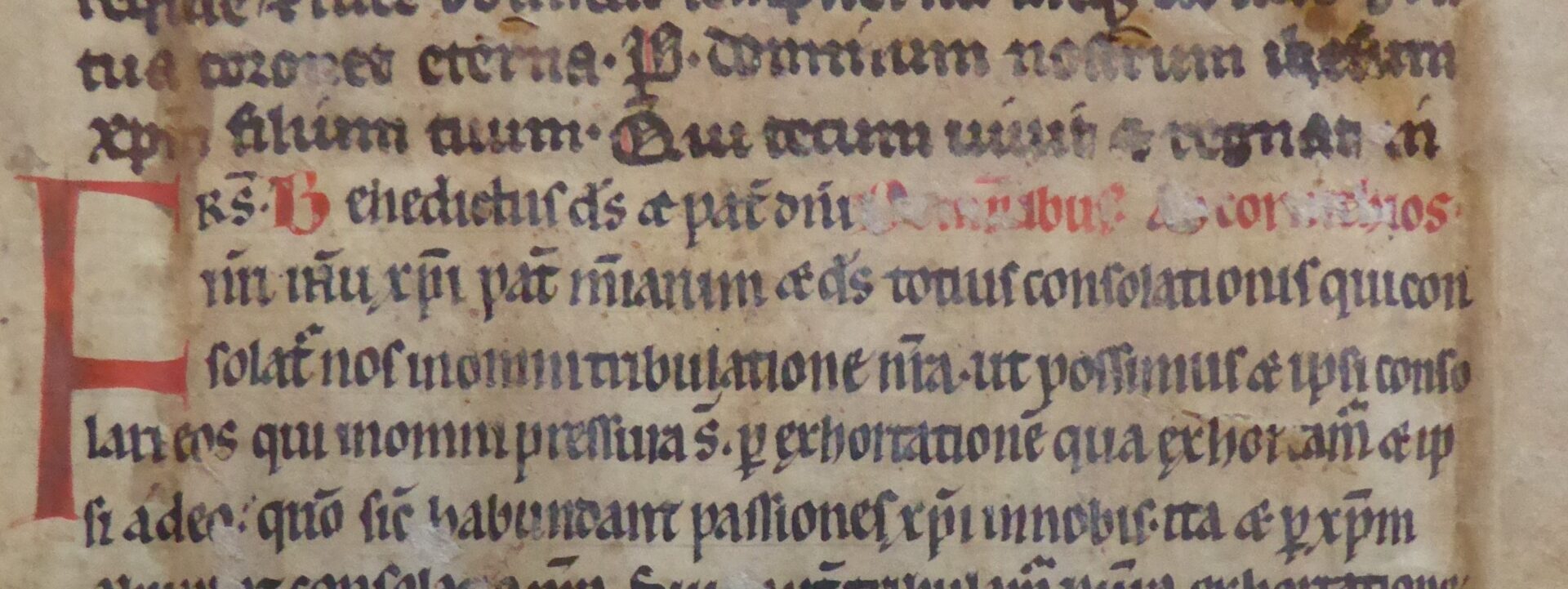
The Middle English Prose Brut is remarkable for the sheer number of manuscripts that have survived to the present day. A chronicle of Britain that spans history and mythology, it is represented by more than 180 extant manuscripts and fragments. For context, Chaucer’s Canterbury Tales survives in less than 100 copies. The Brut corpus is the largest in Middle English apart from the English Bible, and was one of the most popular secular texts of its time.
My project investigates the Brut’s metropolitan production context, with a particular focus on London’s economic and social history in relation to book production, as well as possible reading practices. A significant number of Brut manuscripts can be traced to fourteenth- and fifteenth-century London, Westminster and Southwark; these manuscripts emerged from the city’s thriving vernacular book trade and were circulated amongst an increasingly literate merchant class. The late medieval metropolis was a fascinating space of technological development, shifting class relations and global trade, all of which influenced surviving copies of the Brut. Studies suggest that the Prose Brut may have been one of the first English texts to be produced speculatively, in anticipation of a buyer. Even before the advent of the printing press, London’s book trade was rapidly transforming, with the Prose Brut apparently at its centre.
A must-have book of its age, the Brut may have been linked to communal identity and civic pride in the metropolis, with several versions incorporating material from London civic chronicles. Brut stories even seeped into vernacular culture, featuring in London’s pageants. Medieval Londoners, then, engaged with the Brut both in the streets and upon the page. By examining reading practices around the Brut, I hope to shed light on the Brut’s enduring popularity in medieval London, the engine behind its continual reproduction and circulation.